
In modern production, packaging plays a vital role in a product's market competitiveness. Double-sided labeling machines are key equipment in packaging lines. They efficiently and accurately apply labels to both sides of a product, enhancing its appearance while also meeting the needs of product identification and brand presentation. Choosing the right double-sided labeling machine is crucial for improving production efficiency, ensuring product quality, and reducing production costs. Therefore, this article will explore in detail how to choose the right double-sided labeling machine.
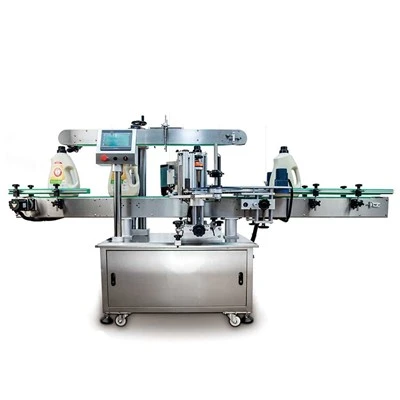
Double-Sided Labeling Machine Production Efficiency, Related Factors, and Selection Methods
Factors Affecting Production Efficiency
- The technical advancement of the equipment is reflected in the labeling speed and intelligent control. Labeling speed is the core indicator for measuring efficiency. Advanced equipment uses high-speed motors and optimized transmission systems to achieve hundreds or even thousands of labeling actions per minute. For instance, models equipped with servo motors can quickly adjust their speed according to the label size and product shape. The intelligent control system realizes functions such as automatic detection and deviation correction. For instance, it automatically adjusts the position of the labeling head when the label deviates, thereby reducing manual intervention and ensuring stable operation, effectively enhancing production efficiency and reducing waste.
- The rationality of the mechanical structure is related to the performance of the label feeding mechanism and the labeling head. A reasonable label feeding mechanism can ensure that labels are smoothly and accurately conveyed to the labeling head, avoiding problems such as label jamming or breakage. For instance, the friction-type label feeding mechanism can adapt to labels of different materials and sizes by adjusting the pressure and speed of the friction wheel to ensure a continuous and stable supply. The labeling head needs to have high flexibility to adapt to products of different shapes and sizes. Advanced equipment is equipped with a rotatable and extendable labeling head that can quickly adjust the Angle and position according to product changes, thereby improving the accuracy and efficiency of labeling.
- The stability of equipment is mainly determined by the failure rate during long-term operation. Equipment with poor stability is prone to production interruption due to frequent malfunctions, which in turn affects the progress and increases maintenance costs and equipment wear and tear. For instance, poor-quality electrical components can easily cause short circuits or open circuits, leading to equipment failure. Therefore, when choosing a double-sided labeling machine, priority should be given to equipment that uses high-quality components and has undergone strict quality inspection to ensure its ability to operate continuously and stably for a long time
Key points of choosing suitable efficient machine tools according to Production Needs
- Labeling Quantity Requirement: Companies need to determine daily or hourly labeling quantity requirements based on production size and number of orders. The production scale is large, the order volumes stable, requires a double-sided labeler, the labeling speeds fast, the high efficiency. Large food manufacturers, for example, may need to label hundreds of thousands of products a day, and a high-speed double-sided labeling machine at speeds of 500 or more per minute to meet production needs.
- Speed and compatibility of the entire production line: as part of the production line, a double-sided labeler must be used in conjunction with filling machine, packaging machines and other equipment. Therefore, when choosing a a double-sided labeler, consider whether its speed matches the speed of the entire production line. If the speed of double-sided labeling machine is too high or too low, it will lead to unbalanced production line and affect overall production efficiency. For example, if the filling machine is running at 300 bottles per minute and the double-sided labeling machine is running at 200 bottles per minute, then the product will pile up and wait to be labeled, reducing productivity.
Requirements for Different Material and Shapes Products and Selection of Suitable Type for Double-Sided Labeling Machine Requirements
Double sided labeling machine requirements for different material products
Plastics: Plastic products have a variety of surface characteristics, from smooth to rough. For smooth plastic products, such as bottles and boxes, labels require less pressure to prevent blistering or peeling. It's also important to choose the right adhesive to ensure the label stays firmly attached to the product's surface. For example, hot melt or water-based adhesives are commonly used on the label of PET bottles because they have good adhesion. Labelling heads should also be made of abrasive, smooth materials such as ceramic or Teflon to minimise damage to labels.
Metallica: Metallica is usually hard, with a smooth surface that requires more pressure to ensure the label is strong. For example, for metal containers such as tin and aluminum cans, a high-pressure labelling device, such as an a pneumatic labeling head, is required to provide sufficient pressure to secure the label to the metal surface. In addition, metal products rust easily. When choosing an adhesive, consider its corrosion resistance to avoid a chemical reaction between the adhesive and the metal that could cause the label to fall off.
Glass products: Glass products have a smooth and fragile surface, so label them with extra caution. The label pressure should be moderate to ensure that the label is firmly attached to the glass and to prevent the glass from shattering under the pressure. In addition, should choose the transparent high, the viscosity moderate adhesive, in order not to affect the appearance of glass products. Self-adhesive labels, for example, are commonly used on glass bottles because they have a moderate viscosity and meet the labeling requirements of glass products. The label head should be made of soft material to avoid scratching the glass surface.
Paper products: Paper products soft and easily deformed, so in the labeling process, labeling pressure and speed must be strictly controlled. Excessive pressure or speed may cause deformation or damage to paper products. For example, for paper packaging such as cartons and cartons, gentle labeling method, such as sponge label heads, should be used to cushion pressure and protect paper products. At the same time, it is necessary to select the adhesive with moderate viscosity and fast drying speed to improve labeling efficiency.
Special requirements for double-sided labeling machines of different shapes
Disc Products: Labeling of disk products is important for positioning accuracy and angle adjustment. Inaccurate positioning can cause labels to tilt or overlap, affecting the product's appearance. For example, for round medicine bottles, a highly accurate positioning system, such as a a photoelectric sensor or vision positioning system, is required to accurately identify the position and angle of the pill bottle and ensure that the label is correctly applied to the designated location. Angle adjustment is also key. Different circular products may require different labeling angles, and devices must be able to easily adjust the angle of the labeling head to meet the needs of different products.
Square products: the label of square products requires to pay attention to label head and fixture design flexibility. The edges of a square product warp or wrinkle easily during labeling, so the labeling head must be able to adjust its position and angle flexibly according to the shape of the square product. For example, during labeling, a rotating label can automatically adjust the angle of a square product to ensure that the label is evenly applied to the surface. Fixture design is also important as it must be firmly clamped onto the square product to prevent it from moving during the labelling process, leading to inaccurate labelling.
Strange products: Strange products have a variety of complex shapes and higher requirements for double-sided labeling machines. It is necessary to Customized design and adjust to the specific shape of the product. For example, for products with irregular curves, a special label head and feed mechanism may be required to ensure that the label is correctly attached to the product surface. In addition, 3D scanning technology may be required to model odd-shaped products and then design model-based labeling solution to improve label accuracy and efficiency.
How to Select a Suitable Machine
Refer to the Manufacturer's Product Compatibility: Manufacturers usually provide detailed information about machine compatible material and shape ranges in their product manuals. When choosing a double-sided labeling machine, an enterprise should carefully review the instruction manual to determine whether the double-sided labeling machine can meet its product labeling needs. For example, if your product is aimed primarily at plastic and glass bottles, you should opt for a double-sided labeling machine, whose instructions spell out the compatibility of the two materials.
Consult an industry expert or Peer Experience: Industry experts have a wealth of expertise and experience to provide professional advice based on your specific needs. Peer companies may have used similar products, and their experience can provide valuable insights. Businesses can communicate with industry experts and peers to learn about the strengths and weaknesses of different brands and models of double-sided labeling machines and make more appropriate choices by attending trade exhibitions, seminars and other events.
Sample testing: Companies can request samples from manufacturers for testing before eventually buying a double-sided labeling machine. Through practical testing, enterprises can directly understand the labeling performance, production efficiency and stability of the machine. Samples of the company's products, for example, are sent to device manufacturers for labeling tests to observe how the label's pasting quality, whether there are bubbles or wrinkles, and to record the equipment's labeling speed and failure conditions. Choose the most suitable device based on the test results.
Find the right double-sided labeling machine within your budget by weighing its features, quality, and price.
Common Features and Values of Double-Sided Labeling Machines
Automatic detection: This feature provides real-time monitoring of label availability and label placement. For example, if a label is broken, lost or misaligned, the machine automatically detects and alerts, stops operation and prevents a lot of waste. This feature also increases the degree of automation of production, reduces manual inspection workload and improves productivity.
Deflection Correction: This feature automatically moves the label to the right place so that it is properly placed to the product. Labeling may change during production because of things like the availability of labels and how the product is handled. This feature quickly fixes these problems and makes sure that the quality and consistency are high. For instance, double-sided labeling machines use a photoelectric deviation correction system that automatically moves the sticker and the sticker based on feedback from the sticker location to make sure the deviation is corrected accurately.
Multi-label applications: For products that need more than one label, such drug packaging, directions for use, and anti-counterfeiting labels may need to be put on at the same time. A double-sided labeling machine that can apply numerous labels at once can speed up production, save space, and lower labor costs.
How to rate the quality of Double-Sided Labeling Machines
Check equipment material: High-quality double-sided labeling machines typically use high-strength metal frames, such as stainless steel or aluminum alloy, for excellent stability and durability. The material of the component is also important. Electrical components, for example, should come from well-known brands to ensure quality and reliability. Mechanical transmission components, such as high-precision gears and bearings, should be made of wear-and corrosion-resistant materials to reduce wear and malfunction.
Investigation Manufacturing Process: Precise manufacturing processes ensures accurate and tight matching of all equipment components to improve overall performance. For example, welds should be smooth and firm, without pores or cracks. Machined parts shall have smooth, burrless surfaces and conform to design precision. At the same time, to pay attention to the assembly process of equipment, ensure the correct assembly sequence and adjustment methods each component, to avoid improper assembly and lead to unstable operation.
Know the brand of the parts: Parts from well-known companies are usually good quality and dependable, which means the equipment will work effectively for a long time. For instance, picking electrical control systems from Siemens and Mitsubishi can provide you more precise control and more consistent performance. Picking sensors from Schneider and Omron can make detection more accurate and responsive.
After-sales service: Excellent after-sales service is crucial for ensuring the normal operation of the equipment. When selecting a double-sided labeling machine, companies should understand the manufacturer's after-sales service system, including the location of after-sales service locations, response times, and the technical level of maintenance personnel. They should also clarify the scope and duration of after-sales service, such as the equipment's warranty period, whether free training is provided, and whether spare parts are available.
Balancing functionality, quality and price within budget
According to the core production requirements to determine the basic features of double-sided labeling machine: enterprises should determine the basic features of double-sided labeling machine according to their own production needs and product characteristics. For example, if a company's products require high labeling accuracy, equipment with high accuracy networkcorrection should be selected. If the company's production scale is small and efficiency requirement is low, the requirement of labeling speed can be reduced appropriately, the selection function is relatively simple, the price is relatively low.
At the same time to ensure quality in the brand and model also won a great deal of advantages: in the quality of the price also won a great deal of advantages, enterprises can guarantee quality in the premise of the price also won double-sided labelers of advantages. When choosing cost-effective equipment, consider both initial purchase and running costs, such as energy consumption and maintenance. For example, some less expensive equipment may consume more energy and, over time, may cost more to operate than more expensive and energy-efficient equipment.
Choosing the right double-sided labeling machine requires a combination of factors, including productivity, product compatibility, functionality, quality, and price. In terms of production efficiency, we should pay attention to the technological advancement of equipment, the rationality and stability of mechanical structure, and choose the machine with appropriate efficiency according to production needs. For products of different materials and shapes, understand their specific requirements for double-sided labeling machines, refer to product instructions, consult with experts, conduct sample testing, and select suitable models. Within the budget, there is a need to balance the functions, quality and price of the double-sided labeling machine, to identify the necessary functions based on core production needs and to select cost-effective equipment while ensuring reliable quality. Only when these factors are taken into account can enterprises choose the best double-sided labeling machine for their own production needs, improve production efficiency, ensure product quality and reduce production costs, so as to gain an advantage in the market competition.