
Basic use:
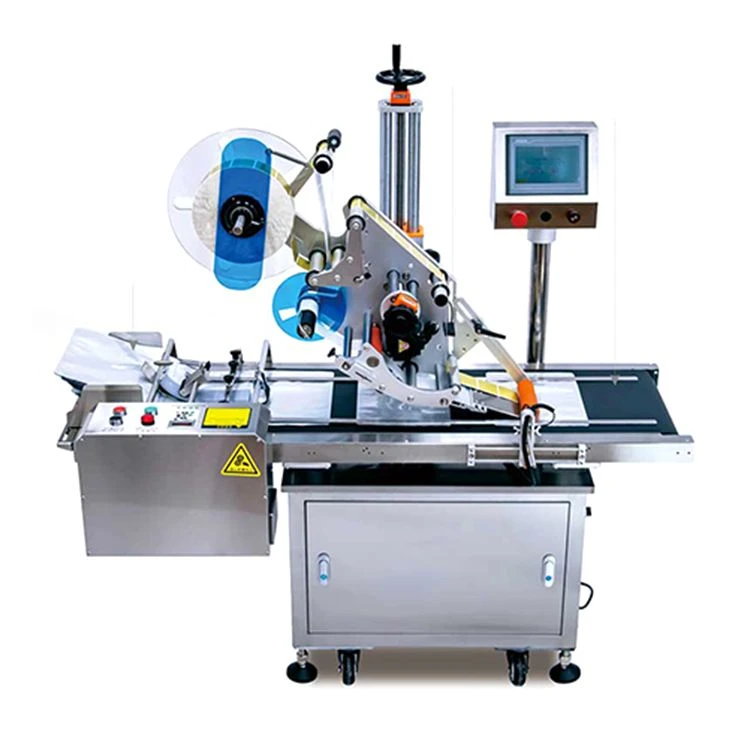
Automatic double-side labeling machine belongs to the side labeling machine series and is suitable for single-side and double-side labeling of flat bottles, round bottles, and square bottles, such as shampoo flat bottles, lubricating oil flat bottles, and hand sanitizer round bottles. Double-side labeling, which labels both sides simultaneously, improves production efficiency and is widely used in daily chemicals, cosmetics, petrochemicals, pharmaceuticals, and other industries.
2. Scope of application
◆ Applicable Labels: Self-adhesive labels, self-adhesive films, electronic supervision codes, barcodes, etc.
◆ Applicable Products: Products that require labels to be attached to the side plane, large arc side surfaces, and circumferential surfaces.
◆ Application Industries: Widely used in cosmetics, daily chemicals, electronics, medicine, hardware, plastics, and other industries.
◆ Application Examples: Shampoo flat bottle labeling, lubricant flat bottle labeling, shampoo round bottle labeling, etc.
3. Working process
Core Working Principle: The sensor detects the product passing through and sends a signal back to the labeling control system. At the appropriate position, the control system manages the delivery of the label and attaches it to the product to be labeled. The product then flows through the labeling device, and the label is affixed to the product, completing the attachment process.
Operation Process: Place product (can be connected to the assembly line) → Product conveying → Product spacing → Labeling (automatically realized by the equipment) → Collect labeled products.
4. Features
◆Powerful functions, one machine can achieve single-sided and double-sided labeling of 4 products (round bottles, flat bottles, square bottles, special-shaped bottles);
◆Adopts double-sided rigid plastic synchronous guide chain to automatically ensure the bottle is neutral, and has low requirements for workers to place bottles and connect the bottles to the assembly line, which greatly reduces the difficulty of workers' operations or assembly line docking. It can be produced by a single machine or connected to the assembly line;
◆Configures a spring-type pressure top mechanism to ensure smooth product transportation and effectively eliminate the inherent error of bottle height;
◆Configures an automatic bottle separation mechanism to automatically separate the spacing before guiding the bottle to ensure the stability of subsequent bottle guiding, transportation and labeling;
◆Configures a double-layer labeling mechanism to ensure labeling accuracy for the first time, and a secondary extrusion labeling to effectively eliminate bubbles and ensure that the head and tail of the label are tightly attached;
◆Intelligent control, automatic photoelectric tracking, with no object without labeling, no label automatic correction and label automatic detection functions to avoid waste of labels and missed labels;
◆The main materials of the equipment are stainless steel and high-grade aluminum alloy, which meets GMP production specifications, and the overall structure is firm and beautiful.
The debugging of the double-sided labeling machine is difficult. It uses an electric eye for detection. The product I was debugging is transparent, making it challenging to detect a stable point when testing at the bottom of the product initially. After consulting with experienced employees, I repositioned the electric eye to the top, which allowed for more stable labeling. There were also other assembly and machine errors, but after consulting the engineers in the factory, the problems were resolved one by one.
During this period, I understood what "practice is the only criterion for testing truth" means. In the past, I only absorbed theoretical knowledge from teachers in school, which was often difficult to understand. Now, by combining theoretical knowledge with practical experience, I am learning more quickly. In the coming period, I will work harder, continually enrich my knowledge, and strive to strengthen my skills.
Maintenance and care methods of automatic double-side labeling machine
1. Equipment installation and use environment: room temperature is required. It is not easy to use in high temperature, humid, acidic and alkaline environment for a long time, so as not to affect the service life, efficiency and accuracy of the equipment.
2. Keep clean: After use, the equipment mechanism, such as friction roller, electrical box, etc., should be cleaned. Alcohol or commercial neutral cleaning fluid can be used for cleaning and maintenance.
3. Precautions for cleaning:
Do not use cleaning tools that damage the surface of the machine.
Do not use corrosive plastic utensils.
Do not use acidic solvents.
4. Regular inspection and maintenance: The machine should be inspected periodically to maintain the normal operation of the machine, including but not limited to the following aspects.
Clean up discarded paper scraps and debris.
Remove oil residue from the roller and edge.
Clean the lens of the sensor with a soft brush or cloth.
Replace the fuse regularly. This equipment uses AC power supply, and a fuse should be used to prevent overload.
Rust prevention, spray each stainless steel and iron parts with anti-rust oil, and gently wipe it with a soft cloth. It is recommended to use Ohm-40 anti-rust oil.
During the operation of the machine, it is strictly forbidden to let water droplets fall on the machine to prevent the machine from rusting and causing the risk of electric shock..
Common troubleshooting methods for automatic double-side labeling machines
1. Broken bottom paper
Broken bottom paper is closely related to the quality of the label bottom paper, scratches on the bottom paper during the label traction path, and label adhesion.
a. Check whether the bottom paper is cut. If the bottom paper is cut, it is necessary to replace the bottom paper with high-quality bottom paper. It is recommended to use glassine bottom paper and require the label supplier to control the die-cutting depth so as not to damage the bottom paper.
b. Check whether the label is scratched during the detour and eliminate the scratching factors.
c. If the label is adhered, the label is easy to tear off. Control the length of the next label to ensure that it does not stick to the labeled product.
2. Labeling deviation exceeds 2mm
Label deviation is related to several factors, including the deviation of the label belt, the direction of the label belt not being parallel to the direction of product conveyance, slipping of the traction wheel, inaccurate product positioning detection, and the label not being attached to the product along the label roller. The product error is influenced by multiple factors. Check the above aspects and then address them in a targeted manner.
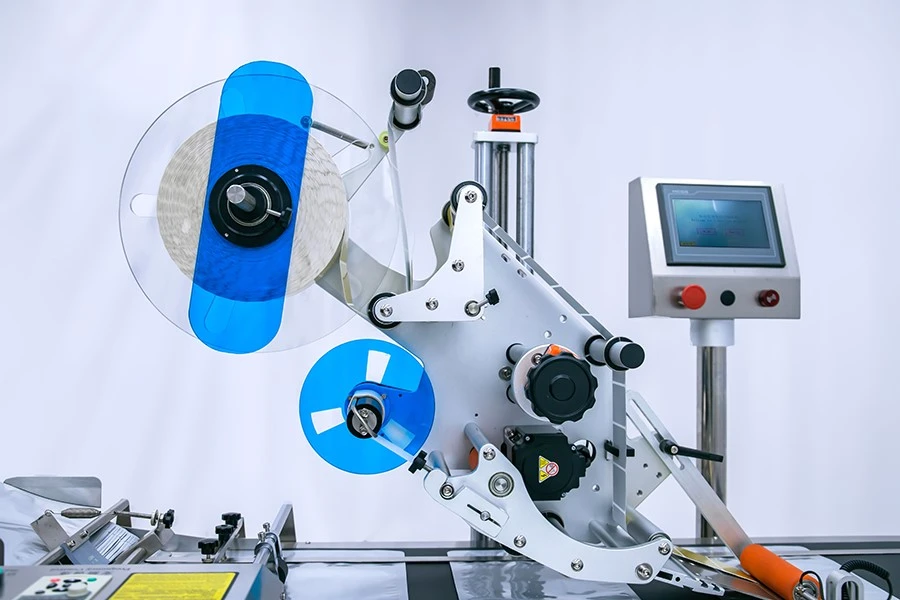
* If the label belt deviates, relax the traction mechanism, pull the label back and forth, and let it automatically go straight. After the label is aligned, clamp the limit rings on both sides to guide the label.
* The direction of the label belt is not parallel to the direction of product delivery. It can be parallel by adjusting the inclination of the labeling head.
* The slip of the traction wheel is related to the wear of the traction wheel and the loosening of the traction wheel locking screw. Both reasons can be tightened to tighten the traction wheel locking screw.
* Product error. During the product production process, the edge error will cause labeling deviation. Only by controlling the product quality can it be solved.
3. Continuous labeling
Continuous labeling and incomplete labeling are related to the sensitivity of electric eye detection. Adjust the sensitivity as needed. For the adjustment method, please refer to the previous section on electric eye adjustments.
If adjusting the electric eye still does not resolve the issue, it may be that the label exceeds the applicable range of the selected electric eye, or the electric eye may be damaged, in which case you should consult the manufacturer. Another possibility is that the label belt is misaligned, preventing the electric eye from detecting the label. Adjust the electric eye to the appropriate detection position.
4. The bottom paper is loose at the stripping plate
The loose bottom paper is related to the low traction speed and the slippage of the traction mechanism. If the traction speed is too low, this can be resolved by increasing the traction speed.
If the traction mechanism slips, tighten the locking screw of the traction roller until the bottom paper no longer slips. Additionally, check whether the transmission belt behind the receiving shaft is broken.