
Automated equipment has become a critical element in modern manufacturing, increasing production efficiency and reducing labor costs. Labeling machines are among the most important components of automated systems, with their efficiency and precision making them indispensable on many production lines. This article will explore the functions, features, benefits, applications, and future trends of labeling machines to help readers better understand this essential tool.
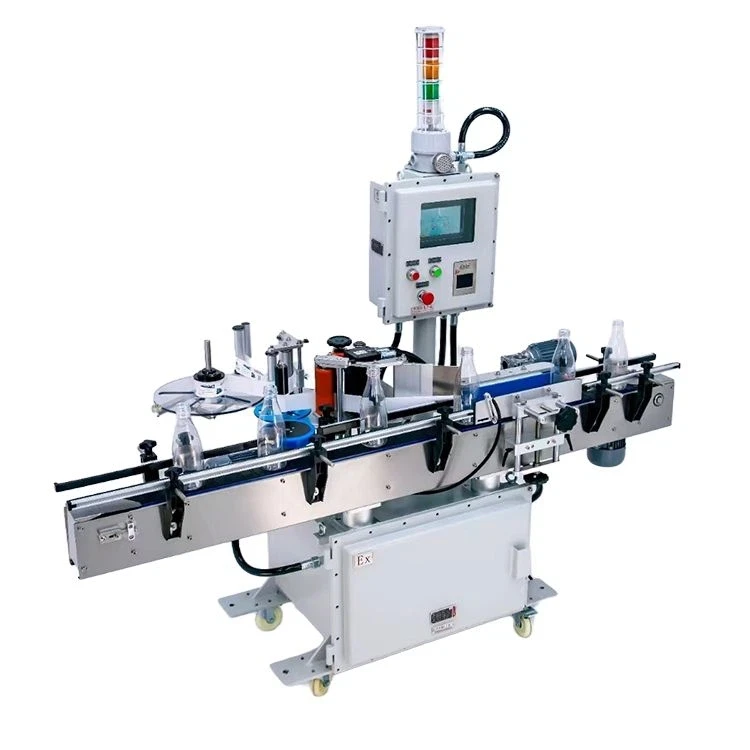
Working Principle of the Automatic Labeling Machine
The automatic labeling machine operates based on three systems: mechanical structure, electronic control, and sensor detection. The detailed explanation is given below:
1. Mechanical Structure
The mechanical construction of an automatic labeling machine is the most important component, which includes the transmission system, sliding platform, reception disc, label roller, cutting mechanism, and labeling wheel.
- Transmission system: Distributes power from electric motors to other structures. The mechanical mechanism rotates, removing the label from the label roller and sending it to the receiving disc.
- Label roller: Typically made up of multiple wheels. Various label sizes necessitate different wheels, which can be replaced as needed.
- The receiving disc, located below the labeling location, receives and transfers the label to the machine's labeling head for application to the product.
- The labeling wheel presses the label onto the goods to ensure proper adhesion.
As the label slides onto the receiving disc, the transmission system can modify the label's speed and position to ensure that it is applied correctly.
2. Electronic Control
The electronic control system is the most significant and difficult component of an automatic labeling machine. It comprises the machine's circuit control board, computer system, and other associated components.
- · Circuit control board: The computer system receives labeling data, including number, size, and application position. The computer sends this information to the motor and other control components via the circuit control board, ensuring that the labels are properly applied.
Sensor Detection
Sensor detection is another critical component of the autonomous labeling machine, which use sensors to identify products and labels on the machine. Photoelectric sensors, cameras, and mechanical sensors are among the most common sensor kinds.
- Sensor Function: These sensors enable the machine to swiftly and precisely detect the position and number of items and labels. If a mistake happens, the sensors provide a signal to the computer system or mechanical structure, which adjusts and corrects the problem, guaranteeing that there are no errors or mislabeling.
The specific workflow of the automatic labeling machine can be broken down into the following steps:
1.When a product enters the labeling machine's working area via the conveyor belt, the sensor determines its position and orientation.
2.When the sensor identifies the product, the labeling machine will automatically discharge the label. The labels are usually preloaded onto a label roll in the machine.
3.Once the label has been dispensed into the proper place, the machine applies it to the product's surface using pneumatic or electric mechanical systems. The label is applied as the labeling wheel matches the speed of the moving product. When the conveyor belt reaches a given point, the driving wheel of the label roll accelerates to meet the conveyor speed, applies the label, and then slows down to stop.
Furthermore, because the label roll may slip, a registration mark is present on the label roll to verify that each label is correctly positioned. This mark is recognized by a sensor, and during the label roll's deceleration phase, the drive wheel re-adjusts to remedy any positional inaccuracies.
To summarize, an automatic labeling machine is a highly automated piece of equipment that can swiftly and accurately apply labels to items of all shapes and sizes, significantly increasing production efficiency and quality.
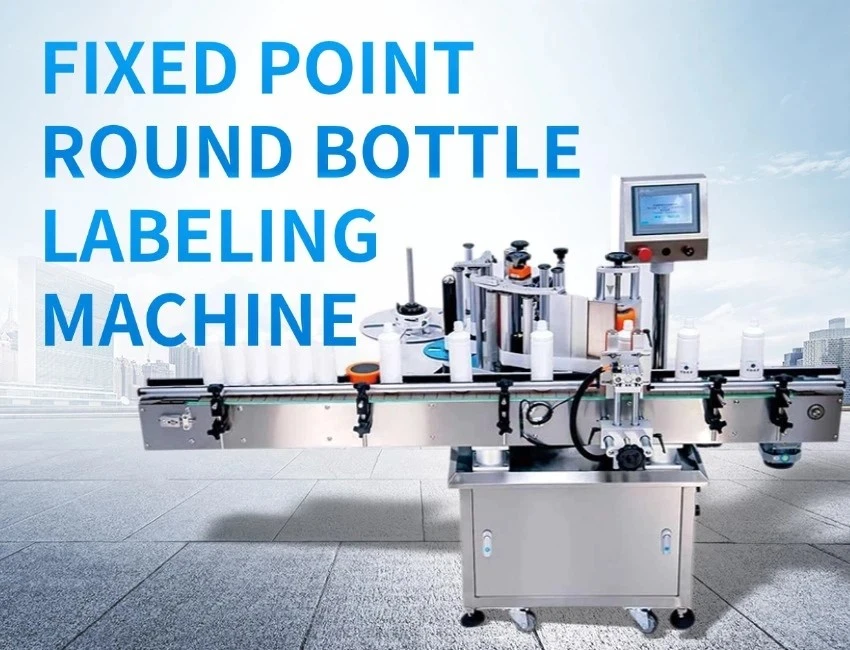
Functions and Features of Labeling Machine
Functions
- High-efficiency labeling: The automatic labeling machine can quickly and accurately apply labels to a wide range of items, including flat, curved, round, and square surfaces.
- Labeling machines may include code or inkjet printers for printing manufacturing dates, batch numbers, and barcodes on labels.
- Intelligent control: Includes capabilities such as no-labeling if no product is recognized, automatic label correction, and automatic label detection to avoid missing labels and reduce label waste. Furthermore, the touchscreen interface enables for simple parameter adjustments, resulting in intelligent administration.
2. Features
Wide application range:
The automatic labeling machine meets the labeling needs for products of different sizes and shapes, including flat surfaces, curved surfaces, large arcs, and uneven surfaces.
It is suitable for various industries such as food and beverages, pesticides and chemicals, paint and coatings, pharmaceuticals, printing, stationery, electronics, and daily chemicals.
High labeling accuracy:
Driven by a high-precision stepper motor or servo motor for precise label dispensing.
The design of the label guiding mechanism ensures that labels do not shift sideways during traction.
Eccentric wheel technology is applied to the traction mechanism to prevent label slippage, ensuring precise label dispensing.
Sturdy and durable:
Labeling machines are typically made from robust materials such as stainless steel and aluminum alloy.
A well-designed mechanical structure ensures the equipment remains stable and reliable during extended operation.
High stability:
Equipped with advanced electrical control systems, such as Panasonic PLC, touchscreen, and photoelectric sensors, which support long-term operation.
Complete fault alarm functions and protection measures ensure that the equipment can stop and alert in the event of an abnormal situation.
Easy adjustment:
Designed with an adjustable base, making it convenient to switch between different products.
The touchscreen interface provides intuitive and easy-to-understand menu options, making parameter adjustment simple and fast.
Flexible application:
Can be used for standalone production or integrated into production lines, adaptable to different production environments.
Can be equipped with various accessories, such as code printers and thermal transfer printers, to meet different labeling needs.
Cost-saving:
The automatic labeling machine significantly improves production efficiency and reduces labor costs.
Precise labeling control reduces label waste, thereby lowering material costs.
Easy to manage:
High degree of automation reduces manual intervention, making management easier.
Features such as production counting, power-saving mode, and production quantity setting reminder make production management more convenient.